
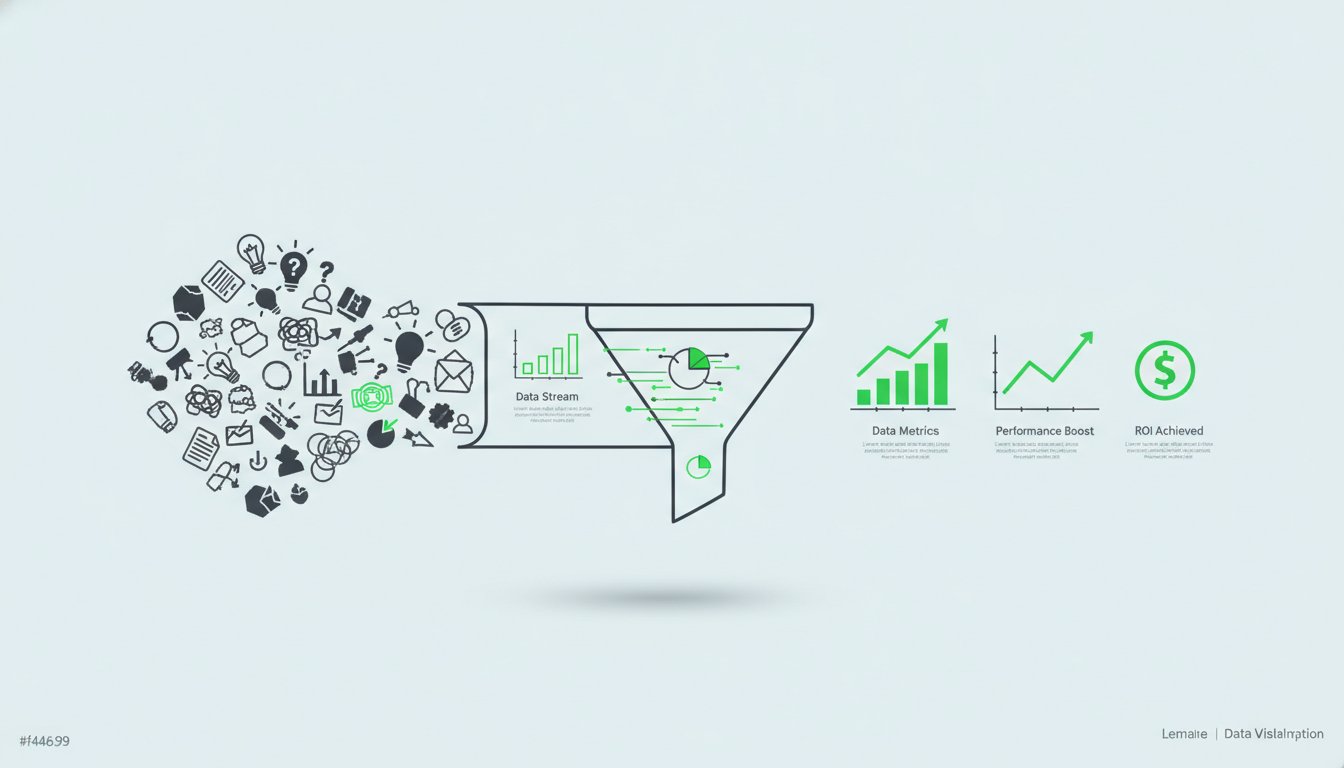
Why do 82% of employees cite learning and growth as their primary engagement driver while most organizations still treat their best ideas like junk mail in a digital suggestion box? Global engagement levels have stalled at a mere 23% as of 2025, yet the market for continuous improvement tools is surging toward a $38.15 billion valuation. The disconnect isn’t a lack of brilliance from your staff. It’s the administrative burden of managing those insights. If you’re tired of chasing spreadsheets and losing track of high-value feedback, you need a dedicated platform for continuous improvement ideas that treats every submission as a strategic asset.
You already know that your frontline teams are your greatest untapped resource for efficiency. We’ll show you how to transform those scattered suggestions into a centralized “value vault” that drives measurable financial impact, with some users generating an average of $6,000 in annual impact per person according to industry benchmarks. This article previews the automated workflows that move ideas to implementation and the dashboards that finally quantify the ROI of every improvement. It’s time to move past the passive suggestion box and start scaling excellence with data-driven precision.
Key Takeaways
- Replace the “black hole” effect of traditional suggestion boxes with a transparent digital ecosystem that captures and acknowledges every employee contribution.
- Leverage a platform for continuous improvement ideas to cut administrative friction using AI-powered clustering and automated workflows.
- Apply structured evaluation frameworks to distinguish between incremental gains and radical shifts, ensuring your innovation pipeline remains both balanced and result-driven.
- Drive cultural transformation by launching targeted Innovation Challenges that align your workforce’s collective intelligence with your most critical financial goals.
- Stop guessing. Use real-time dashboards to translate raw suggestions into tangible cost savings and documented efficiency gains.
Beyond the Suggestion Box: Why Your Organization Needs a Dedicated Platform
The traditional suggestion box is a graveyard for potential. In most organizations, employee insights vanish into a “black hole” of physical bins or unmonitored email aliases, leaving contributors disengaged and leadership blind to frontline realities. A modern platform for continuous improvement ideas replaces this stagnation with a centralized, transparent hub designed to crowdsource, evaluate, and track every operational change in real time. By 2026, a single source of truth for operational excellence (OpEx) is no longer a luxury; it’s a requirement for organizations aiming to stay competitive in a market projected to reach $38.15 billion. Manual tracking in fragmented spreadsheets inevitably leads to “idea leakage,” where high-value insights are buried under administrative burnout and version control errors.
The Inefficiency of Legacy Systems
Generic project management tools are where great ideas go to die. They lack the structured submission workflows necessary to engage a busy frontline, leading to the high failure rates seen in unstructured innovation programs. This functional gap is at the heart of the Ideawake vs. spreadsheets debate. While some organizations attempt to build custom internal tools, they often find themselves trapped in technical debt and low adoption cycles. Choosing to buy a specialized platform provides the AI-driven deduplication and gamification features that home-grown systems simply cannot match. It ensures the continuous improvement process becomes a core competency rather than an administrative nightmare.
Connecting Frontline Insights to Executive Strategy
The structural gap between the shop floor and the C-suite is a primary cause of operational friction. A dedicated platform for continuous improvement ideas bridges this divide, turning frontline observations into executive-level strategy. This alignment is a powerful catalyst for growth. The benefits of employee ideation programs extend far beyond the balance sheet, fostering a culture of ownership that directly combats the global 23% engagement crisis. When employees see their ideas implemented, retention improves and productivity climbs. Industry data confirms that one in four improvements results in significant time savings, averaging nearly one hour saved per day per improvement. It’s time to stop guessing and start executing with precision.
The Architecture of a High-Impact Continuous Improvement Platform
Building a high-impact infrastructure for innovation requires more than a digital repository. It demands an active engine designed to eliminate administrative friction while supporting the full lifecycle of an idea. A modern platform for continuous improvement ideas must function as a high-performance filter that prioritizes value over volume. Without this architecture, organizations quickly become overwhelmed by the “noise” of low-quality submissions, leading to the administrative burnout mentioned previously. By 2025, it’s projected that 40% of employee engagement software will incorporate AI to solve this exact problem, moving beyond simple storage to intelligent processing.
Leveraging AI for Idea Evaluation
The primary barrier to scaling innovation is the manual labor required to screen and categorize suggestions. Ideawake AI addresses this by automating the first pass of idea screening, identifying duplicates, and clustering similar themes before a human manager ever sees them. This shift allows leaders to function as strategists rather than data entry clerks. Using AI tools for innovation managers transforms raw, often fragmented frontline feedback into actionable plans. These tools act as digital facilitators that refine suggestions in real time, ensuring that only the most viable concepts move forward for evaluation. It’s about maximizing clarity while minimizing the time spent on repetitive tasks.
Gamification and the Psychology of Participation
Software alone doesn’t create a culture of continuous improvement; people do. Sustained participation relies on the psychology of recognition rather than just monetary incentives. High-impact platforms utilize gamification features like transparent voting, leaderboards, and peer recognition to create a “democracy of ideas.” These elements foster a sense of ownership, making employees feel like active stakeholders in the company’s success. Structured Innovation Challenges further focus this energy by directing the workforce toward solving specific business bottlenecks rather than submitting random thoughts. This targeted approach ensures that the collective intelligence of your team is always aligned with high-priority executive goals. To see how these features work in a live environment, you can schedule a brief walkthrough of the platform.
3 Examples of Continuous Improvement Ideas in Action
To understand the power of a platform for continuous improvement ideas, you must look beyond abstract methodologies and examine the tangible results of frontline insights. High-performing organizations don’t just wait for lightning to strike; they build an infrastructure that captures every spark. Every suggestion should ideally aim to eliminate one of the 8 forms of Lean waste, such as overproduction, waiting times, or defective processing. By categorizing these insights, leaders can maintain a healthy balance between incremental vs. radical innovation, ensuring the business evolves at every level simultaneously.
Example 1: The Incremental Efficiency Tweak
In a complex logistics environment, a frontline operator identified a redundant data entry step that added zero value to the end customer. By submitting this observation through a dedicated platform, they triggered a workflow that eliminated a specific instance of overproduction waste. The result was a 15% reduction in processing time for that specific product line. This wasn’t just a “suggestion”; the platform tracked the implementation from the warehouse floor directly to the executive dashboard. It provided leadership with immediate visibility into the cumulative cost savings that would have otherwise been lost to administrative friction.
Example 2: The “Mistake” That Became a Product
Not every breakthrough begins as a deliberate project. The history of Post-it notes is a classic example of an employee idea that was originally a mistake. Dr. Spencer Silver created an adhesive that didn’t stick strongly enough for its intended use, yet he recognized its potential for something else. In a modern setting, a centralized database prevents these moments of unintended brilliance from being lost in private email threads. It allows other departments to view, vote on, and iterate on “failed” experiments, turning internal accidents into global market leaders.
Example 3: The Radical Cultural Shift
Radical shifts often emerge from the most unexpected corners of the workforce. The Flamin Hot Cheetos story remains the ultimate testament to frontline empowerment, where a janitor’s insight revolutionized an entire product category. Today’s enterprises replicate this success by using their platform to host virtual hackathons designed to tackle deep technical debt or cultural bottlenecks. These initiatives empower employees to move beyond small tweaks and propose fundamental changes to the business model, creating a high-performance culture where every voice has the potential to drive massive financial impact.
Evaluating and Prioritizing Ideas for Maximum ROI
Collecting thousands of suggestions is the easy part. The real challenge lies in distinguishing high-value insights from the inevitable “noise” that high-volume crowdsourcing produces. Without a structured idea evaluation process, organizations fall into the trap of “innovation theater.” This is a state where teams are busy with activity but fail to move the needle on key performance indicators. A modern platform for continuous improvement ideas eliminates this ambiguity by providing a systematic scoring framework. By involving cross-functional experts during the evaluation phase, you ensure that ideas are viewed through multiple lenses, from technical feasibility to market demand.
The core of this prioritization is the Impact vs. Effort matrix. This tool allows managers to quickly identify “Quick Wins,” which are improvements that require minimal resources but deliver immediate gains. Strategic projects, while requiring more significant investment, are also clearly defined and tracked. Automated workflows then take the highest-scoring ideas and move them directly into a project initiation phase, ensuring momentum isn’t lost to administrative delays. It’s about building a pipeline that prioritizes results over mere participation.
Data-Driven Decision Making
When you’re presenting a new initiative to the C-suite, anecdotes aren’t enough. Numbers are the only language that matters for budget approval. Using an idea management ROI calculator allows you to predict potential financial outcomes before you commit a single dollar to implementation. This predictive capability is enhanced by Stage-Gate workflows, which require ideas to meet specific criteria before advancing to the next level of investment. This disciplined approach protects your resources and ensures that your innovation program is viewed as a profit center rather than a cost center. For a comprehensive look at the frameworks and metrics required to quantify these results, explore our guide on how to measure continuous improvement across your enterprise. If you’re ready to see how a data-driven approach can transform your operations, you can book a demo to see these evaluation tools in action.
Avoiding Common Evaluation Pitfalls
One of the most persistent threats to a successful continuous improvement program is the “HiPPO” effect, or the Highest Paid Person’s Opinion. When the most senior person in the room dictates which ideas move forward, it kills employee engagement and often leads to suboptimal choices. To counter this, many high-performing teams use reverse brainstorming to stress-test ideas. Instead of asking why an idea will work, you ask why it might fail. This identifies hidden risks early in the lifecycle. Standardizing what you look for is also vital. Following a specific checklist for what makes an idea great ensures that every suggestion is evaluated on its own merit, regardless of who submitted it. This objectivity is what separates world-class innovation programs from those that eventually fizzle out.
Implementation: Turning Your Platform into a Competitive Advantage
Implementation is often mistaken for a mere technical task. In reality, it’s a cultural shift that requires deep executive buy-in to succeed. A successful implementation signals to the entire organization that innovation isn’t a one-time event but a permanent strategic priority. To build momentum without overwhelming your teams, start with a focused pilot program or a targeted Innovation Challenge. This approach allows you to prove the value proposition in a controlled environment before scaling. By 2026, the organizations that lead their industries will be those that have successfully moved past the “suggestion box” mentality and toward a disciplined execution model.
Your platform for continuous improvement ideas shouldn’t exist as an isolated silo. To ensure high adoption rates, the system must live where your employees already spend their time. Seamless integrations with Microsoft 365, Slack, and Jira are vital for reducing friction. When an employee can submit a breakthrough insight directly from their primary communication tool, participation becomes second nature. Ideawake acts as a partner in this transition, providing the expertise to reduce implementation timelines from months to just a few weeks.
The Build vs. Buy Dilemma
Many enterprises consider developing an internal tool to manage suggestions, but the hidden costs of maintenance and technical debt are often prohibitive. When you compare building vs. buying idea management software, the advantage of a purpose-built system is clear. Specialized platforms offer modern architecture and no-code configurability that allow you to scale across thousands of users without constant IT intervention. A purpose-built platform provides immediate access to advanced features like AI-driven evaluation and automated ROI tracking that would take years to develop in-house. Choosing a dedicated solution ensures your long-term cost savings are maximized through immediate operational gains and zero maintenance overhead.
Your 90-Day Roadmap to Operational Excellence
Moving from a static environment to a high-output innovation engine requires a methodical plan. The phases of continuous improvement begin with technical configuration and move quickly into active crowdsourcing and evaluation. A critical, yet often overlooked, step is “closing the loop” with your employees. Publicly celebrating successful implementations and acknowledging contributors ensures the pipeline remains full of high-quality insights. This transparency turns a software rollout into a sustainable competitive advantage that competitors simply can’t replicate. It’s time to stop settling for average results and start building a culture of excellence. Schedule a demo today to see how Ideawake can transform your operational efficiency.
Scaling Operational Excellence with Data-Driven Precision
The transition from a passive suggestion box to a strategic platform for continuous improvement ideas is the difference between operational stagnation and market leadership. By centralizing crowdsourced insights and applying AI-driven evaluation, organizations can reduce administrative overhead by up to 80% while ensuring no high-value concept is lost. You’ve seen how structured workflows and transparent ROI tracking turn frontline observations into documented financial gains. It’s time to stop letting potential vanish into fragmented spreadsheets and start building a permanent competitive moat.
Ideawake provides the end-to-end innovation lifecycle management you need to move from initial submission to final impact measurement. With a proven track record of enterprise-scale implementations globally, we help you bridge the gap between employee brilliance and executive strategy. Don’t let your organization settle for average engagement when you can unlock a high-performance culture of excellence. Transform your frontline ideas into measurable ROI; sign up for an Ideawake demo today.
Your team already has the answers to your most pressing efficiency challenges. Give them the tools to make those answers heard and watch your organization thrive.
Frequently Asked Questions
What is a platform for continuous improvement ideas?
A platform for continuous improvement ideas is a centralized digital ecosystem that allows organizations to crowdsource, evaluate, and implement employee-led changes. Unlike static tools, it provides a structured workflow to move from raw insight to measurable financial impact. It functions as a strategic engine for operational excellence; it ensures that frontline intelligence is captured and aligned with executive goals rather than being lost in fragmented communication channels.
How does continuous improvement software differ from a suggestion box?
Continuous improvement software provides transparency and accountability that physical or digital suggestion boxes lack. While suggestion boxes often become “black holes” where ideas disappear, modern platforms offer real-time tracking and automated feedback loops. This ensures every contributor knows exactly where their idea stands in the evaluation pipeline. It transforms passive submission into an active, collaborative project management cycle that prioritizes results over mere activity.
Can this platform integrate with our existing tools like Microsoft Teams or Jira?
Modern platforms are designed to live where your employees already work by integrating with tools like Microsoft Teams, Slack, and Jira. These integrations reduce the friction of switching between applications, which is vital for maintaining high participation rates across a diverse workforce. By embedding the submission process into daily communication channels, you ensure that capturing a breakthrough idea is as simple as sending a chat message.
How do we measure the ROI of a continuous improvement program?
ROI is measured by tracking the tangible cost savings, efficiency gains, and time reclaimed through implemented ideas. High-impact platforms include built-in dashboards that quantify these metrics against the initial investment in real time. Beyond direct financial impact, you should also monitor qualitative gains like increased employee retention and safety improvements. Data-driven reporting ensures your innovation program remains a visible profit center that justifies its own budget. To go deeper on the specific frameworks and KPIs used by data-driven enterprises, see our detailed breakdown of how to measure continuous improvement for 2026.
What are some examples of successful continuous improvement ideas?
Successful ideas range from incremental process tweaks to radical shifts in business models. Common examples include identifying redundant steps in a production line to reduce waste or implementing new safety protocols that lower insurance premiums. Other wins might involve optimizing energy consumption in facilities or digitizing manual paperwork to save hundreds of administrative hours. The key is that every idea addresses a specific operational bottleneck with a clear path to implementation.
How do we encourage employees to submit their ideas regularly?
Sustained engagement is driven by recognition and the visible implementation of ideas rather than monetary rewards alone. Use gamification features like leaderboards and peer voting to foster a healthy “democracy of ideas” within the office. Launching targeted Innovation Challenges also focuses employee energy on solving specific, high-priority business problems. When staff see their contributions actually changing the workplace, participation naturally becomes a core part of the organizational culture.
Is AI used in evaluating the ideas submitted to the platform?
AI is a mandatory component for modern platforms to manage high submission volumes without increasing administrative burden. It automates the first pass of screening by identifying duplicate ideas and clustering similar themes into actionable groups. This allows innovation managers to focus their time on high-potential concepts rather than manual data entry. By 2025, it’s projected that 40% of employee engagement software will incorporate AI to solve these exact evaluative bottlenecks.
How long does it take to implement a continuous improvement platform?
Full implementation of a platform for continuous improvement ideas typically takes between two to six weeks. This timeline depends on the scale of your organization and the complexity of required software integrations. A phased approach starting with a pilot program allows you to demonstrate quick wins and refine your strategy before a full-scale rollout. Expert partners accelerate this process by handling technical setup and cultural training concurrently to ensure immediate adoption.